
Is Bhutan merely experimenting with digital finance -- or is the Himalayan kingdom punching far above its weight, quietly playing one of the most sophisticated strategic games in Asia today? asks Varun Arya.

The Reserve Bank of India (RBI) is in no rush to launch the central bank digital currency (CBDC) nationwide, as its most promising use case - cross-border payments - depends on other countries rolling out their own CBDCs simultaneously for the system to work effectively. That said, the CBDC pilot is progressing well, with the user base in India expanding to about seven million, said RBI Deputy Governor T Rabi Sankar.

The Indian rupee, swaying through multiple headwinds, tiding over global trade disruptions and massive foreign fund outlfows, is unlikely to arrest its descent until tariff impact overhangs, notwithstanding robust domestic macroeconomic tailwinds. The Reserve Bank of India (RBI), which sees the rupee's depreciation as a silver bullet to offset the tariff shock, expects the currency to find its stable course once India reaches a trade deal with its largest trading partner, the US.

'We have seen that stablecoins lack the basic attributes of money, their advantages are neither unique nor unambiguous and their risks are all too real.'

Years of repression and disappearances have taught Venezuelans, the hard way, not to voice either their anger or their joy, observes Radha Roy Biswas who spent her formative years in Venezuela.

The Indian government has expressed its disagreement with the IMF staff's 'baseline' assumption that the 50 per cent US tariffs on its goods exports 'would remain in place indefinitely', based on which the staff pegged the country's GDP growth at 6.6 per cent this year, and pared its 2026-27 projection by 20 basis points to 6.2 per cent.

India and Japan on Friday decided to more than treble their currency swap arrangement from $15 billion to 50 billion in a move seen as sending an important signal for the rupee.
This will help to address short-term liquidity problems.

A day after BRICS (Brazil, Russia, India, China and South Africa) nations agreed on a $100-billion foreign currency reserve pool to tackle the volatile foreign exchange markets, India on Friday said the pool would act as a buffer arrangement, adding it might not withdraw anything from this reserve.

In trade negotiations, as in chess, sometimes you need to accept a temporary disadvantage to secure a better long-term position, points out Sonal Varma, chief economist (India and Asia ex-Japan) at Nomura.

BRICS countries may reach consensus at next month's G20 summit on creating a $100 billion currency reserve fund to help ease short-term liquidity pressure and safeguard financial stability of major emerging economies, a senior Chinese central bank official said.

The meet will focus on the recent global economic developments, challenges and collective measures to address them

Despite the demonetisation of 2016 and the rise in digital transactions that followed, the economy's dependence on cash has remained as high as ever. So when the Reserve Bank of India (RBI) introduced a pilot project of its version of digital cash - called the central bank digital currency (CBDC) - on December 1, many questions were asked. Can the CBDC replace physical cash, even partially? Can it match cash in terms of convenience? Are CBDC transactions truly anonymous?

The visitor returns not just with the jewel-like beauty of the country imprinted on the mind, the body rejuvenated by hot stone massages, but also with the captivating stories and myths that are built into every important structure -- whether a tourist magnet or an off-the-beaten track spot.

The use of RBI capital to strengthen public sector banks will have many positive implications for the economy -- and a few manageable downsides, points out R Jagannathan.

Those who consider the rupee as a proxy for virility have started thumping their chests and dreaming of dethroning the dollar from its coveted position, observes Tamal Bandyopadhyay.

The Reserve Bank has told the International Monetary Fund (IMF) that the objective of frequent interventions in the forex market is to curb excessive volatility, dismissing the Fund's rationale for reclassifying India's exchange rate regime. The IMF, following the Article IV consultation with the Indian authorities, reclassified the status of the exchange rate regime to "stabilised arrangement" from "floating" for period between December 2022 to October 2023. India's Executive Director at IMF K V Subramanian and Senior Advisors Sanjay Kumar Hansda and Anand Singh questioned the selection period adopted by the Fund for analysis and also reclassification of the country's exchange rate regime.

People can send their Rs 2,000 banknotes to specified regional offices of the Reserve Bank through the insured post for credit in their bank accounts. This is a hassle-free option for the people who are away from the regional offices of the Reserve Bank. Besides, the RBI is offering TLR (Triple Lock Receptacle) form to people for a deposit of Rs 2,000 banknotes in their bank account.
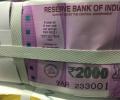
The Reserve Bank on Monday advised banks to provide shade from the sun and water to customers waiting to exchange or deposit Rs 2,000 notes. It can be noted that during the note ban in 2016, there were allegations of customers dying while waiting in queues to exchange bank notes. Following Friday's announcement of withdrawing Rs 2,000 notes -- the notes continue to be legal tender unlike demonetisation exercise -- there were concerns about customers facing inconvenience, especially given the summer being at its peak.
200 staffers, consisting of RBI officials and support teams, who are essential to perform critical functions, were isolated at a separate facility in a dedicated quarantined environment near all three RBI data centres.

The Reserve Bank of India (RBI) on Tuesday told the Delhi high court that withdrawal of Rs 2000 notes is not demonetisation but a statutory exercise, and the decision to enable their exchange was taken for operational convenience.

Condemning strongly the terrorist attack in Paris, India on Sunday made a case for united global effort to combat the menace of terrorism.

Policymakers should aspire to restore the pre-Independence environment where the rupee was trusted and used all over South Asia, in Southeast Asia, in West Asia, and in East Africa, suggests Ajay Shah.

Higher discounts on crude oil offered by the United Arab Emirates (UAE) to wean India away from Russian crude may soon see Indian refiners ramping up purchases from the Gulf nation, officials at multiple refiners said. They also pointed to the recent agreement on trade settlement in national currencies signed between India and the UAE as a reason for this. "While discussions are underway, the UAE has offered discounts on crude, which will be more than that of the current level of Russian discounts.

When I asked Krishna Gopal Sengupta, who had travelled through Bangladesh from Chittagong to Petrapole if the interim government had made any impact at ground level, he said, "it's been only a couple of days. They will need some time." Shyam G Menon reports from Petrapole, India's entry point with Bangladesh.
The Reserve Bank on Saturday extended the special drive to withdraw Rs 2,000 bank notes from the system by another week, till October 7.

India has decided to authorise the country's biggest lender SBI to promote rupee trade with Russia and soon Moscow will name its bank to operationalise the mechanism, exporters' body FIEO said on Wednesday. The RBI in July issued a detailed circular asking banks to put in place additional arrangements for export and import transactions in Indian rupees in view of increasing interest of the global trading community in the domestic currency. Currently, a large part of bilateral trade between India and Russia is getting settled in rupee due to sanctions imposed by the US and Europe following Moscow's attack on Ukraine.

Reserve Bank and the finance ministry on Wednesday asked top management of banks and representative of trade bodies to push exports and import transactions in rupee. It was stressed during a meeting that banks should connect with their foreign counterparts for opening special rupee vastro accounts to facilitate cross-border trade in Indian currency rather than popular mode dollar, sources said. Trade associations and their foreign trading partners should explore opportunities to make use of the framework, sources added.

The International Monetary Fund (IMF) warned on Tuesday that India's general government debt (comprising both central and state government debt) could exceed 100 per cent of gross domestic product (GDP) in the medium term. It also cautioned that long-term debt sustainability risks are high due to the significant investment required to meet India's climate change mitigation targets. The Indian government, however, disagreed, arguing that risks from sovereign debt are extremely limited as it is predominantly denominated in domestic currency.

The Reserve Bank on Monday asked banks to put in place additional arrangements for export and import transactions in Indian rupees in view of increasing interest of the global trading community in the domestic currency. Before putting in place this mechanism, banks will require prior approval from the Foreign Exchange Department of the Reserve Bank of India (RBI), the central bank said in a circular. "In order to promote growth of global trade with emphasis on exports from India and to support the increasing interest of global trading community in INR, it has been decided to put in place an additional arrangement for invoicing, payment, and settlement of exports / imports in INR," it said.
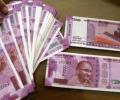
No form or requisition slip is required for exchange of Rs 2,000 notes up to a limit of Rs 20,000 at a time as part of exercise to withdraw high-value currency notes from circulation. RBI on Friday in a surprise move announced withdrawal of Rs 2,000 currency notes from circulation but gave public time till September 30 to either deposit such notes in accounts or exchange them at banks. Unlike the November 2016 shock of demonetisation, when old Rs 500 and Rs 1,000 notes were invalidated overnight, the Rs 2,000 notes will continue to be a legal tender.

Finance Minister Nirmala Sitharaman on Tuesday nudged the fintech industry to break the distance barrier and have more engagements with the government and its agencies to enhance trust. Sitharaman was replying to a question by Kris Gopalakrishnan, chairman, Global Fintech Fest (GFF) 2022 advisory board, who wanted to know how to ensure trust among industry, regulators, and the government. "I don't want to sound cliche, but distance brings distrust. "So, cut the distance down, have greater engagement with the government," the minister said.

Postings to places at an altitude above 1,000 metres but less than 1,500 metres, between 1,500 and 3,000 metres, and above 3,000 metres entail different rates of allowances -- the higher the location, the bigger the allowance, reveals Tamal Bandyopadhyay.

The rupee weakened by 14 paise to close at a new lifetime low of 79.59 against the US dollar on Tuesday as a strong greenback overseas and persistent foreign fund outflows continued to weigh on investor sentiment. This comes a day after the RBI announced measures for international trade settlement in rupees. At the interbank forex market, the local unit opened weak at 79.55 against the greenback and witnessed an intra-day high of 79.53 and a low of 79.66.

The Union government will soon make amendments to the foreign trade policy (FTP) to enable exporters to claim export benefits for settling trade in rupees. These benefits are, so far, available for export payments received in foreign currencies. After the Reserve Bank of India (RBI) unveiled a mechanism to settle international trade transactions in the local currency on Monday, exporters have been demanding that the Ministry of Commerce and Industry come up with a clarification on the matter.

It's mid-morning and the two-kilometre stretch from Rashbehari Avenue to Gariahat Market is bustling with activity. Dotted with saree shops and hawker stalls that sell everything, from hairpins, hangers and towels to hosiery, mobile phone covers and kurtas, this is one of South Kolkata's busiest shopping areas. And it is beginning to wake up to the Paytm crisis.

The Reserve Bank is likely to continue buying dollars from market to add to its reserves in the coming months, which has crossed $300 billion, says a report.

Banks have raised concerns over the new international trade settlement in rupee, fearing that facilitation of such a mechanism could result in them facing the ire of economic sanctions by the West, people aware of the matter said. Large banks with overseas operations have sought clarity and assurance from the Reserve Bank of India (RBI) that they will not be targeted with sanctions for facilitating rupee trade with a sanction-hit country such as Russia. The present payment mechanism is a shift from earlier such arrangements, like the one with sanction-hit Iran, which involved banks facilitating settlement of international trade that did not have business in the sanctioned nation.

State Bank of India (SBI) is willing to work with Russian banks not facing sanctions and remain on the Society for Worldwide Interbank Financial Telecommunication (SWIFT) network to open a special rupee vostro account (SRVA) for invoicing in Indian currency. The country's largest lender in a statement said it has not been identified as the nodal bank for handling Russia-related transactions. In July, the Reserve Bank of India (RBI) allowed banks in India, including SBI, to open an SRVA to promote invoicing in Indian rupee, subject to certain safeguards. Accordingly, the bank in a statement said it is "making necessary arrangements and processing requests received from various banks, including Russian banks", following guidelines laid out by the RBI.

The Centre is pushing for bilateral trade with Cuba and its settlement in rupee as a part of its strategy to internationalise the domestic currency. A delegation from Cuba, including officials from its central bank, met Indian government officials and banks last month to discuss bilateral trade and settlement using the Reserve Bank of India's (RBI's) payment mechanism in rupee, said people aware of the matter. Since the Cuban nation has opened up its economy and is looking to implement reforms to attract investments from India, Cuban banks have evinced interest in opening special rupee vostro accounts (SRVAs) with Indian banks.
 © 2026 Rediff.com - Advertise with us - Disclaimer - Privacy Policy - Sitemap - Feedback - About us - Terms of use - Grievances